Mahi-Mahi Fishing in Los Sueños, Costa Rica
Chase mahi-mahi, also known as dorado or dolphin fish, in the productive offshore waters of Costa Rica’s Central Pacific. Look for current lines, floating debris and bait-rich water where these fast-growing predators gather.
- Best May–November
- Year-Round Possibility
- Trolling & Casting
- Excellent to Eat
One of the Most Exciting Offshore Fish to Catch
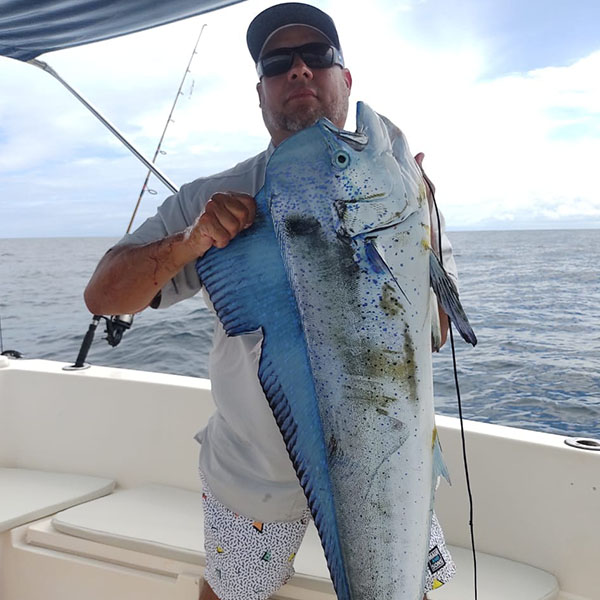
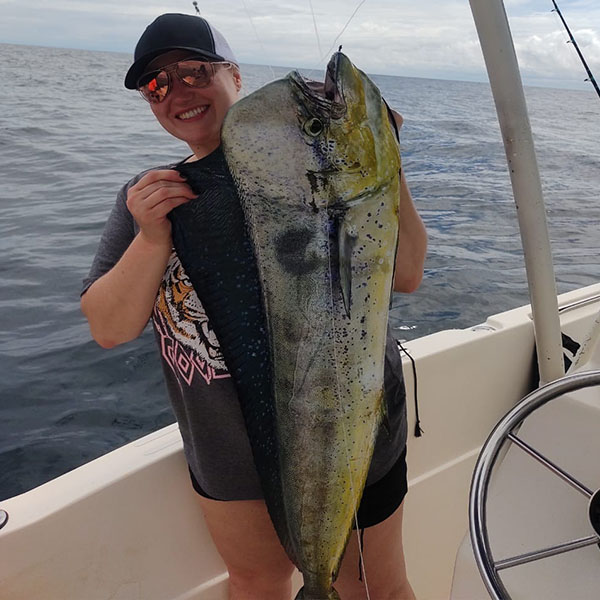
Mahi-mahi are instantly recognizable by their brilliant green, blue and gold coloration. They are aggressive predators that grow quickly and can provide explosive strikes and spectacular jumps once hooked.
In Costa Rica they are commonly called dorado, while many anglers also know them as dolphin fish.
Mahi frequently concentrate around floating objects, weed lines, logs and current edges where small baitfish and other food gather. Finding the right floating structure can quickly turn a quiet offshore day into fast action.
- Fast, aggressive offshore gamefish
- Excellent for families and experienced anglers
- Trolling and casting opportunities
- Often found around floating debris
- Can gather in schools
- Excellent fresh table fish
- May be encountered with other offshore species
Mahi-Mahi Season in Costa Rica
Mahi-mahi can be encountered throughout much of the year, but the green season generally provides the strongest and most consistent Central Pacific opportunities.
Dorado remain possible, although sailfish are generally a larger focus during the peak Central Pacific billfish season.
Offshore conditions begin shifting and mahi opportunities can become increasingly important.
Increased rain and offshore debris can create productive current lines and floating structure that attract mahi.
Mahi remain part of the offshore mix while sailfish numbers typically begin increasing again.
Follow the Current Lines and Floating Structure
Mahi are highly mobile fish, but they frequently gather around areas that concentrate food.
Instead of simply trolling across empty ocean, experienced captains look for visual signs that may indicate productive water.
Floating objects can create miniature offshore ecosystems where baitfish gather and mahi come to feed.
Long lines of floating vegetation can concentrate bait and provide an obvious area for the captain to investigate.
Changes in water color, temperature and current can create feeding zones for mahi and other pelagic species.
Feeding birds and active bait can reveal where predators are concentrating below the surface.

Mahi-Mahi Fishing Techniques
Dorado are aggressive fish, which gives the crew several effective ways to target them.
Smaller baits and offshore lures can be pulled around current lines, weed lines and floating structure.
When mahi gather near floating debris, live bait can trigger aggressive feeding responses.
Spinning tackle allows anglers to cast directly toward visible mahi around debris or weed lines.
Mahi are frequently encountered while trolling many of the same offshore spreads used for sailfish and marlin.
Bright Colors and Fast Offshore Action
Few gamefish change color as dramatically or put on a more photogenic display beside the boat.
 Costa Rica Mahi-Mahi
Dorado Fishing Trip
Los Sueños Offshore
Costa Rica Mahi-Mahi
Dorado Fishing Trip
Los Sueños Offshore
A Great Fish for Almost Any Group
Mahi frequently attack baits and lures with speed, making the initial hookup exciting.
Hooked mahi often jump repeatedly and display brilliant colors near the surface.
Mahi is one of the most popular edible fish caught on Costa Rica offshore charters.
Because mahi may gather in groups, locating productive structure can sometimes produce several opportunities.
Fast, Visual and Fun
Mahi are a particularly entertaining offshore species because so much of the fight happens near the surface.
They can make fast runs, change direction quickly and jump repeatedly. Their bright coloration can become even more dramatic as the fish approaches the boat.
What Boat Is Best for Mahi Fishing?
Mahi can be caught from several boat sizes. The best choice depends mostly on your group, budget and desired level of comfort.
32 FT Mako
An affordable option for smaller groups that want to fish offshore without paying for a large A/C yacht.
View 32 FT Mako →Fish Whistle 32 FT
Twin diesels, fighting chair, live bait, tuna tubes and a more traditional offshore sportfishing layout.
View Fish Whistle →Dream Maker 36 FT
A Cabo Express with air conditioning, private restroom, tuna tubes and a strong offshore setup.
View Dream Maker →A Full Day Gives You More Range
Dorado can move with currents and floating debris, so they are not always found in exactly the same location.
A full-day offshore charter gives the captain more range to search productive water while also leaving opportunities for tuna, sailfish and marlin.
Check Full-Day Availability- More range to search current lines
- More time to inspect floating debris
- Opportunities for schools of mahi
- Possible tuna and billfish encounters
- More flexibility if conditions change
What Else Might You Catch?
Tuna can share the offshore waters with mahi and provide a very different style of fight.
Yellowfin Tuna →Sailfish may enter many of the same trolling spreads used while searching for dorado.
Sailfish Fishing →Marlin can also be part of a full-day offshore trip depending on season and conditions.
Marlin Fishing →More Los Sueños Fishing Information
Common Questions
When is the best time for mahi-mahi in Costa Rica?
Mahi can be caught much of the year, but May through November is generally one of the strongest periods on Costa Rica’s Central Pacific coast.
Is mahi-mahi the same fish as dorado?
Yes. Mahi-mahi, dorado and dolphin fish are common names for the same species.
Where do you find mahi offshore?
Captains frequently search current lines, weed lines, floating logs and other debris because these areas can concentrate bait and attract mahi.
How do you catch mahi-mahi?
Common techniques include trolling small baits and lures, live-bait fishing and casting around floating structure.
Are mahi-mahi good fighters?
Yes. They are fast, aggressive fish known for quick runs, rapid direction changes and frequent jumps.
Can we keep mahi-mahi?
Mahi are an edible offshore species and may generally be retained subject to current fishing regulations and your captain’s guidance.
Is mahi fishing good for families?
Yes. Mahi are colorful, active and exciting fish and can be a particularly enjoyable offshore target for families.
Do mahi travel in schools?
Smaller mahi frequently gather in groups, especially around productive floating structure. Larger fish may travel in smaller groups or pairs.
Should we book a full day?
A full day is recommended when mahi is a priority because it gives the captain more range to search current lines and floating debris.
What other fish might we catch?
Depending on season and conditions, offshore trips may also encounter yellowfin tuna, sailfish, marlin and wahoo.
Check Mahi-Mahi Fishing Availability
Tell us your preferred fishing date, group size and whether mahi-mahi is your main target. We will help match your group with the best available charter.
- Tell us your preferred fishing date
- Tell us how many people are fishing
- Tell us if mahi is your priority
- We will recommend the best available boat
Check Mahi Charter Availability
Include your date, number of anglers and any other species you would also like to target. If you are unsure which boat is best, we can recommend one.
Contact US Now
We would love to hear from you! Please fill out this form and we will get in touch with you shortly.